Are Your Pharmacy Points Worth the Price You're Actually Paying?

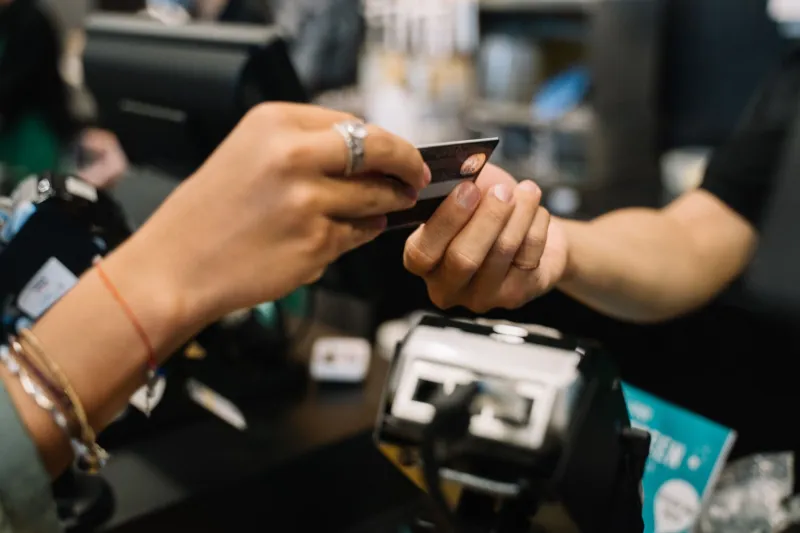
For millions of Australians, scanning a loyalty card at the pharmacy counter has become as automatic as handing over a Medicare card. The promise is simple: spend money, earn points, redeem rewards. It feels like a fair exchange. But the mechanics operating behind these programs — and the purchasing behaviours they quietly encourage — deserve far closer scrutiny than most shoppers ever apply.
How Pharmacy Loyalty Programs Are Actually Designed
Australia's largest pharmacy chains, including Chemist Warehouse, Priceline, and Terry White Chemmart, have invested heavily in loyalty infrastructure. Priceline's Sister Club, for instance, has accumulated millions of members and is frequently cited as one of the country's most active retail loyalty programs.
These schemes are not designed primarily as customer appreciation tools. They are, at their core, data collection and behaviour modification systems. Every purchase you make with your loyalty card attached generates a data point — what you bought, when you bought it, how much you spent, and whether a promotion influenced your decision. Over time, this builds a detailed health and lifestyle profile that retailers use to personalise offers, target promotions, and ultimately guide your spending toward categories with higher profit margins.
This is not a conspiracy — it is standard retail strategy, and it is entirely legal under Australian Consumer Law. But understanding it changes how you should interpret every "bonus points" offer that appears in your inbox.
The Mathematics of Points: What Are They Actually Worth?
Most pharmacy loyalty points convert to vouchers at a rate that, when calculated honestly, represents a return of roughly one to two cents per dollar spent. To earn a $10 voucher through Priceline's Sister Club, for example, a member typically needs to spend several hundred dollars across eligible purchases.
Compare that to the potential savings available through generic medicine substitution, PBS entitlements, or simply purchasing healthcare products through a lower-cost online pharmacy — and the value proposition of loyalty points begins to look considerably thinner.
Consider a practical scenario: a customer purchases a branded vitamin supplement for $42.99 to earn bonus points during a promotional period, when a comparable generic product is available for $18.50 with no loyalty incentive attached. Even accounting for the points earned on the premium purchase, the net cost remains substantially higher than simply choosing the less-marketed alternative.
The points, in this case, did not save money. They softened the perception of overspending.
The Psychology at Work
Behavioural economists have long documented the "point currency illusion" — the tendency for consumers to assign disproportionate value to loyalty currencies because they feel separate from real money. When a pharmacy advertises "earn 2,000 bonus points" on a product, the brain processes this as a gain rather than evaluating whether the product itself represents good value.
Pharmacy chains understand this deeply. Bonus point events are strategically timed around product launches, seasonal health trends, and periods when consumers are already primed to spend — cold and flu season, summer sun care, back-to-school health preparation. The timing is rarely coincidental.
Promotional catalogues from major chains consistently feature bonus points on private-label or high-margin products rather than on PBS-subsidised medicines or low-cost generic alternatives. This is not an accident. The loyalty mechanic effectively creates a pricing umbrella over products that might otherwise struggle to compete on value alone.
Your Data: The Hidden Currency of Loyalty
Beyond the financial dimension, there is a privacy consideration that Australian pharmacy loyalty members rarely pause to examine. By enrolling in these programs, customers consent to the collection and analysis of purchasing data that is, in many cases, intimately health-related.
Purchases of blood pressure monitors, diabetes supplies, incontinence products, mental health supplements, and weight management items all flow into loyalty databases. While Australian privacy legislation — including the Privacy Act 1988 — imposes obligations on how this data can be used and shared, it does not prevent retailers from using it to refine internal marketing strategies or segment their customer base.
The question worth asking is not just "what am I earning?" but "what am I providing in exchange for these points?" For many members, the answer involves a detailed, longitudinal record of their health-related purchasing behaviour — a form of personal data with genuine commercial value.
When Loyalty Programs Do Deliver Real Value
This is not an argument for abandoning loyalty schemes entirely. Used with awareness, they can provide genuine benefit — particularly for consumers who would make the same purchases regardless of any points incentive.
If you regularly purchase a specific sunscreen brand, a particular brand of vitamins you have researched independently, or personal care products you have already price-compared across retailers, earning points on those purchases represents a legitimate, cost-neutral benefit.
The risk arises when the points become the reason for the purchase rather than an incidental bonus attached to it.
Some practical guidelines worth applying:
-
Compare the base price first. Before factoring in any points or rewards, check whether the product is available at lower cost through an online pharmacy, a competing retailer, or in a generic formulation. At Aussie Health Shop, we believe transparent pricing should always be the starting point — not the afterthought.
-
Scrutinise bonus point events. When a promotion offers triple points on a specific product category, ask why. The answer is almost always that the retailer's margin on those items is sufficient to absorb the cost of the promotion while still returning a profit.
-
Read your privacy settings. Most pharmacy loyalty programs allow members to adjust data sharing preferences. Review these settings and opt out of any data uses that extend beyond the basic program function.
-
Calculate the actual return. Convert the points you are earning into their dollar equivalent and measure that against the price premium you may be paying to earn them. If the maths does not work in your favour, it is worth reconsidering.
-
Do not let points drive prescription decisions. Loyalty programs do not typically apply to PBS-listed medications, but they can influence decisions around over-the-counter products that sit adjacent to clinical needs. Always prioritise clinical appropriateness over rewards potential.
Rethinking the Relationship with Your Pharmacy
Australia's pharmacy sector is genuinely competitive, and consumers have more options than ever — including reputable online pharmacies that offer transparent pricing, PBS dispensing services, and access to a broad range of health products without the structural pressure of a loyalty program nudging every transaction.
The most valuable relationship you can have with any pharmacy, online or physical, is one built on transparent pricing, sound clinical advice, and genuine access to the most appropriate and cost-effective products for your health needs. Loyalty points can sit alongside that relationship — but they should never define it.
Next time you reach for your rewards card at the counter, take a moment to ask the more important question first: is this purchase actually the best choice for my health and my budget? If the answer is yes, scan away. If you are only buying it for the points, it may be worth a second thought.